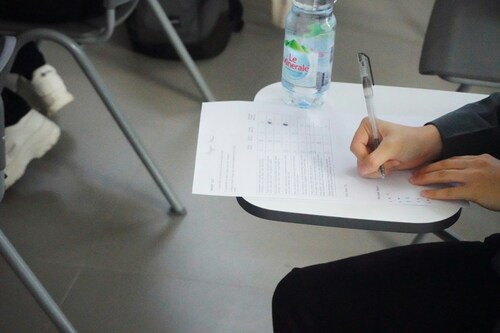
IB English asks for two different kinds of performance, and preparing for one does not automatically prepare students for the other. That makes the practical question how to divide revision time between unseen analysis and prepared work on studied texts. One is unseen analysis: reading a passage cold and building an argument on the spot. The other is prepared work on studied texts.
In Language A: Literature, Paper 1 is a guided literary analysis of an unseen passage, and Paper 2 is a comparative essay on at least two studied works. The individual oral sits on the prepared side, a response built on extracts from works studied during the course.
In Language A: Language and Literature, Paper 1 is an analysis of previously unseen non-literary texts, and Paper 2 is a comparative essay on studied literary works. The learner portfolio is a space for practicing first-read responses and tracking development across text types.
The IB’s own 2021 guides for both tracks set out the same pattern, with unseen analysis in Paper 1 and studied works in Paper 2. Students on either track face two tasks with different demands.
Why Strength in One Area Doesn’t Automatically Build the Other
Knowing a text well does not guarantee being able to use that knowledge somewhere new. A 2013 review in Language Learning, “Transfer of Learning Transformed,” discusses inert knowledge: learners hold information but fail to apply it in unfamiliar contexts. Its argument is that transfer usually requires active transformation and specific support, not just possession of what has been memorized. For IB English, this helps explain why a student fluent in their set texts can stall on a first-read passage.
The same logic applies in reverse. A student who reads perceptively in general may still struggle to build a sustained comparative argument from specific moments in two studied works. That skill needs its own practice.
Diagnosing Your Own Balance
Lopsided preparation is easy to recognize. A student who has concentrated on memorizing content recalls themes, quotes, and commentary fluently, then slows down or turns generic on a text they haven’t met.
Memorization is not safe even on Paper 2. The IB’s 2026 examiner instructions for Language A say that Paper 2 demands a focused argument, explicit comparison, and balanced treatment of two studied works. They also warn against pre-rehearsed, formulaic, or memorized essays that do not answer the question set. A rehearsed essay answers the question the student prepared for, not the one on the paper.
The 10-minute Revision Balance Scorecard shows which side is weaker, whichever direction the gap runs.
- Log: after each English session, write one line: K (known-texts work such as Paper 2 or oral-style practice) or U (unseen, Paper 1-style practice), plus what you produced, for example, “Paper 2 plan” or “Paper 1 intro + 2 body paragraphs.”
- Score the unseen side from 0 to 2, one point per question: in 10 minutes, can you state a clear guiding claim about an unfamiliar passage, and can you pick 2–3 specific features to carry your paragraphs?
- Score the known-texts side from 0 to 2, one point per question: given a newly worded comparative question, can you state a thesis that answers that wording, and can you name two moments from each work you would use?
- Interpret: if one side scores two or more points lower, that is your main gap. Don’t split the difference.
- Rebalance: make the next three sessions target the weaker side, and keep the stronger side to short, prompt-specific maintenance.
- Review: re-score weekly on the same day, using a different unseen text and a different Paper 2-style prompt each time, so you’re not measuring how well you remember the scorecard itself.
- Decide: if the weaker side hasn’t gained a point after two weeks, change the practice type, for example, from untimed to timed, rather than just adding hours.
The scorecard names the weaker side but says nothing about what to do there. Two students with the same low score can fill the same hours very differently, and the difference between a useful session and a comfortable one lies in the kind of practice.
Practice That Fits Each Gap
Depth on studied texts means more than rereading or piling up notes. The useful practice is building focused, question-specific arguments that move between two works, so prepared knowledge stays flexible enough for whatever prompt appears.
Unseen skill needs repeated exposure to genuinely unfamiliar texts under realistic conditions: a clock, no preparation, and the job of choosing a focus and constructing an argument alone.
For that unseen skill, IB English Paper 1 past papers are the closest available match to the exam itself, because they put genuinely unfamiliar texts in front of you in the exam’s own format. They train first-read orientation, choosing a guiding claim, and building a timed argument. They do not replace prompt-led comparison of two studied works for Paper 2, or the building of a flexible bank of text-specific evidence and interpretive options for those works.
Good use means a new text each attempt, with reflection on the choices you made about focus, evidence, and paragraph logic rather than on finding the right interpretation. Weak use means redoing one paper until it feels fluent, or leaning on a template that sounds the same across text types. Both of those habits inflate confidence. The 2013 Language Learning review on transfer argues that improvement on a familiar instance does not guarantee performance in a new context, and fluency on a repeated paper mostly measures how well you know that paper.
If you get faster but your claims stay broad or your evidence thin, change the constraint rather than repeating the same paper. Tighten the planning time, or require every paragraph to rest on specific textual features.
Why Naming Your Gap Pays Off
The split between unseen analysis and prepared work on studied texts is built into the course. It doesn’t depend on a particular set of texts or a particular exam year, so the same question works in any session: which skill have I underworked?
A student who can answer it, whether the gap lies in first-read analysis or in the depth and flexibility of textual knowledge, can put effort where it counts. That beats adding revision hours with no direction. So run the scorecard, see which side is weaker, and aim your next sessions of practice there.
About the Author